Children learn best when they are curious, relaxed and free to make something with their own hands. Online art and craft classes make that possible at home, and they work especially well for families who speak more than one language. This article explains how to choose creative courses for children, how to support bilingual learning and how to keep sessions fun.
Why creative online classes work for kids
A good online class gives a child a clear task, a friendly guide and room to experiment. Painting, folding paper or building a small model all train patience, fine motor skills and imagination. Kids also enjoy showing the finished piece to the teacher at the end.
The goal is joy first, technique second. When children feel safe to make mistakes, they learn faster and come back eagerly for the next lesson.
Setting up a small creative corner at home
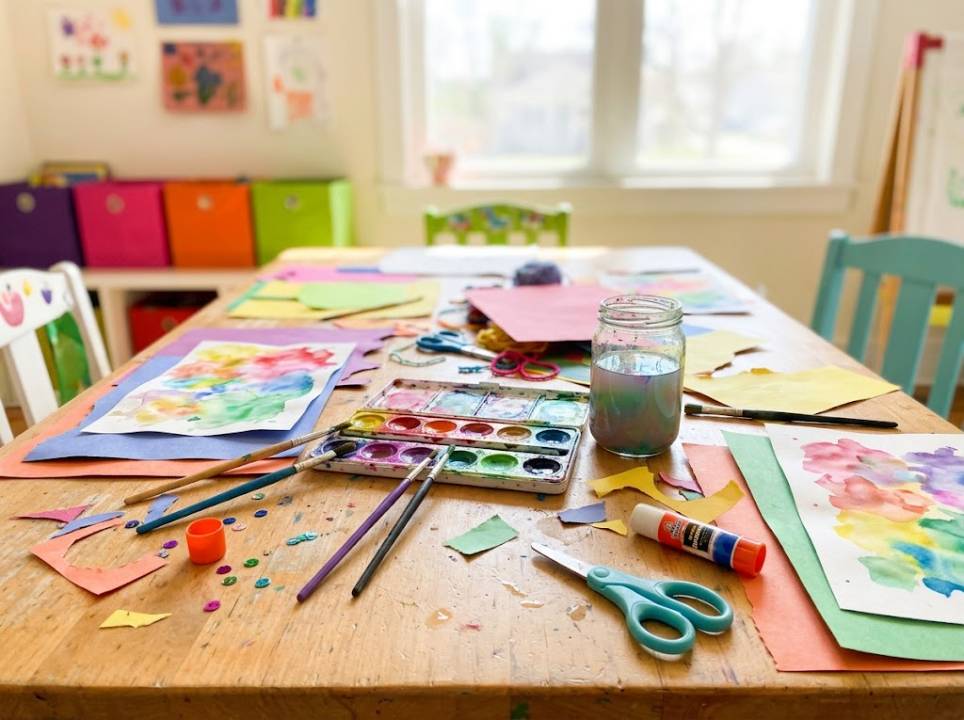
You do not need a studio. A table by a window, a washable cloth and a box of basic supplies are enough. Keep paper, pencils, paints, scissors and glue in one place so that setting up takes only a minute.
Place the screen at a comfortable height and make sure the child can see the teacher and the table at the same time. A second device or a small stand for the tablet helps greatly.
Choosing a course that fits your child
Look at the age range, the length of each session and the materials required. Younger children do better with short, hands-on lessons of thirty to forty minutes, while older ones can enjoy longer projects with several steps.
Ask for a trial lesson. Watch how the teacher speaks, how clearly the instructions are given and whether children are encouraged to share their ideas. A warm tone matters as much as a clever project.
Creative learning in two languages
Many families raise children with two or more languages, and art class can become a natural place to use them. Naming colours, shapes and materials in both languages turns a painting session into a vocabulary lesson without any pressure.
If your family has Polish roots, children's stories, craft instructions and course materials can be adapted for young Polish speakers with the help of a Polish translator, so that the same activity can be enjoyed in both languages.
Keeping children engaged online
Short instructions, visible examples and quick changes of activity keep attention high. A teacher who asks questions and invites children to show their work holds interest far better than one who lectures.
At home, stay nearby for the first few minutes, then step back. Praise effort and curiosity, not only the result. A child who hears "I like how you tried a new colour" is more willing to try again.
Simple craft ideas for the first weeks
Start with projects that bring quick success: paper collages, handprint animals, painted stones, simple origami or a small paper garden. Each uses cheap materials and teaches a basic skill such as cutting, folding or mixing colours.
Add a story to every project. A paper boat can sail to a faraway island, and a painted leaf can belong to a talking tree. Stories give children a reason to keep going and a way to speak about what they made.
Words and play
Children love big and funny words. Learning how long a word can be is a playful way to introduce language curiosity, and a look at the longest German word often makes kids laugh and ask for more.
Let them invent their own words for the colours they mix. This kind of play builds confidence with language and supports the habit of noticing sounds and meanings.
Working with parents
Parents are partners in every online course. A short message after each lesson with a photo of the work, a few words about what the child learned and a suggestion for extra practice keeps families informed and motivated.
Share the list of supplies in advance, with easy substitutes for items that are hard to find. Clear, friendly communication avoids stress on the day of the class.
Safety and screen time
Choose non-toxic, washable materials, and keep scissors and other tools at the right size for the child's age. An adult should be close by during any activity that uses sharp or messy items.
Balance screen time with offline moments. Encourage children to finish their work away from the device, then share a photo or a short description at the next lesson.
Tracking progress without pressure
Keep a folder or a wall of finished pieces. Looking back after a month shows a child how much they have grown, and it gives the family something to celebrate together.
Avoid ranking or comparing children. Each child follows their own path, and the value of a lesson lies in what they discover along the way.
Learning more about art education
For a broader look at how art is taught around the world and why it matters for development, the overview of art education offers useful background for parents and teachers.
In short, choose a warm teacher, prepare a simple space, welcome both languages and keep things playful. With these habits, online creative classes can become a happy part of a child's week.